Why watermelon rind is suddenly being taken seriously
The first time you set the green edge on the cutting board, it’s hard not to treat it like packaging—something that only exists to protect the sweet part. But lately, the “trash” pile feels suspiciously large. With grocery prices staying noticeable and more cooks paying attention to food waste, watermelon rind has started getting looked at the way broccoli stems or carrot tops did a few years ago: not as a delicacy, but as a practical ingredient you already paid for.
What’s driving the shift isn’t just thrift. Social media recipes make rind seem easy—quick pickles, stir-fries, blended drinks—and that lowers the psychological barrier. The catch is that rind’s value depends on what you actually end up eating. A tablespoon of pickled rind isn’t the same as a cup of cooked rind, and the “health” version often arrives with extra sugar or salt. That gap between hype and real portions is where the serious questions start.
What the USDA profile suggests about nutrients and value
The moment you actually consider eating the rind, the first impulse is to look for a label-style verdict: “Is this secretly nutritious, or just crunchy water?” The USDA-style nutrition profile can be helpful, but it’s more like a baseline than a promise. It tends to show rind as low in calories with small amounts of minerals and vitamins, and a bigger “point” in its favor is usually fiber compared with the red flesh. That doesn’t automatically make it a superfood—it just hints that rind plays a different role: more filling, less sweet, and easier to overestimate if you only nibble at it.
Where people get tripped up is the math of real portions and real recipes. Pickling can turn a modest serving into something you eat by the forkful but also something that may carry a lot of added sugar and sodium. Cooking softens it so you’ll eat more, which can make the fiber feel more noticeable—sometimes pleasantly, sometimes not. The profile tells you “what’s there”; your prep decides what actually counts.
Texture and taste are the real learning curve
The first bite is usually where the plan wobbles. Raw rind has a squeaky crunch that reads more like cucumber skin than fruit, and the pale layer under the green can taste faintly grassy—especially if you expected “watermelon, but less sweet.” That mismatch is the real barrier, not the nutrition numbers. Even people who like bitter greens can find rind odd because it isn’t bitter or sweet; it’s just…firm, watery, and a little blank.
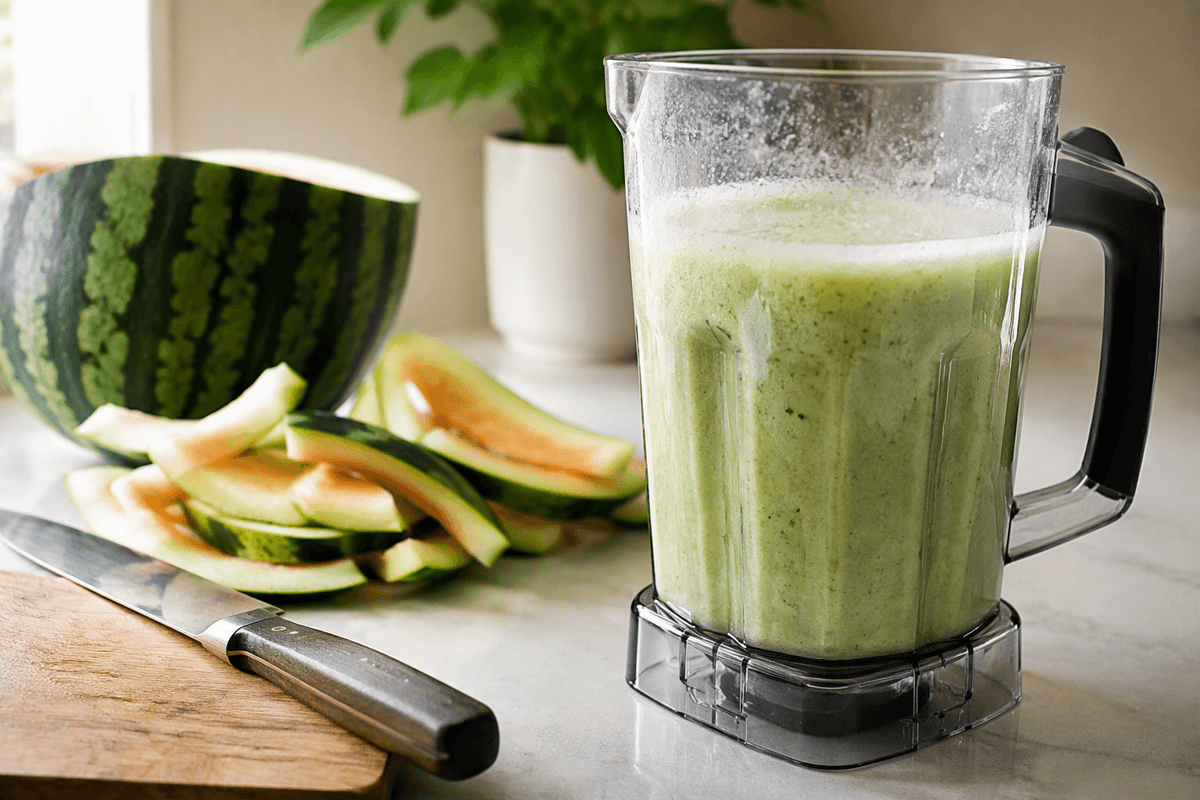
Once you change the texture, the flavor suddenly makes more sense. Heat turns the white part tender and slightly translucent, closer to zucchini; a quick brine keeps it crisp but gives it a clear “pickle” identity. Blending hides the chew entirely, but it also makes portion size slippery: it’s easy to drink more than you’d ever sit down and chew. The same fiber that looks appealing on a profile can feel very different depending on whether you’re nibbling, chewing, or sipping it.
When a smart idea causes unexpected stomach discomfort
It usually shows up later, not at the cutting board. You try a “waste-free” move—maybe a cup of sautéed rind or a big blended drink—and then notice a heavy, stretched feeling that doesn’t match how light the ingredient seemed. The common misunderstanding is assuming “low-calorie” equals “easy on the stomach.” Rind can be mild in flavor but still feel like a lot of roughage, especially if you went from a few pickled pieces to a real serving because the texture finally worked.
Preparation changes the experience in opposite directions. Cooking can make it easier to chew and therefore easier to eat more of, which is great until the extra fiber catches up. Blending removes the chewing “speed bump,” so portions quietly grow. Pickling tends to keep servings small, but the trade-off is that added salt or sugar can make a snack feel heavier than expected. If the pattern continues, it’s often less about rind being “bad” and more about the mismatch between portion size, recipe extras, and how your gut handles sudden changes.
Five practical ways to eat watermelon rind at home
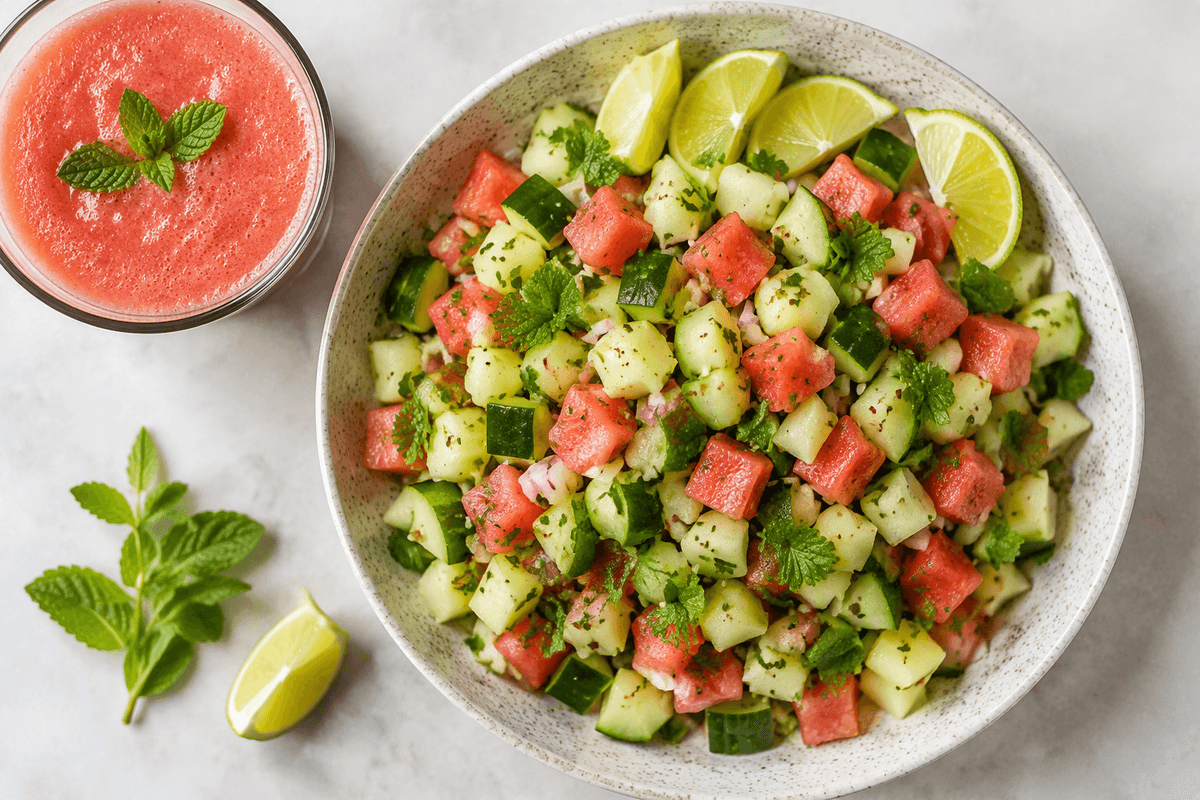
At home, the easiest way to “like” rind is to stop treating it as a substitute for the red flesh and give it a job it’s actually good at. Quick pickles are the low-commitment option: you’re usually eating a few pieces at a time, which keeps the fiber bump modest, but the brine can quietly add a lot of sodium (and sometimes sugar). A simple stir-fry or sauté (thin slices, hot pan, a salty sauce) tends to turn the white part tender—more like zucchini—though it also makes it easy to eat a bigger portion than you planned.
If you want it to disappear, blend a handful into a smoothie or agua fresca; it adds bulk without much sweetness, but the “drinkable” format is where portions get slippery. Rind also works in a salsa-style chop with cucumber, lime, and herbs, where crunch is the point and servings stay small. And if you’re already making a soup or curry, simmered rind can act like a mild vegetable sponge—helpful for reducing waste, but not always predictable in texture or how filling it feels.
Food safety, cleaning, and pesticide concerns people raise
The part that makes most people pause is the shiny green skin. It looks “handled,” and it’s the piece that actually sat against bins, conveyor belts, and shopping carts. So even if the white layer seems harmless, the question becomes whether you’re bringing more residue into the recipe than you meant to—especially if you’re blending rind, where a rough rinse doesn’t feel like enough.
In practice, the concern is less about a special “rind toxin” and more about the same issues as any thick-skinned produce: surface dirt, microbes from cutting into an unwashed exterior, and whatever pesticide or waxy coating might be present. Scrubbing under running water is usually what changes the risk profile the most, but it’s not perfect or consistent—deep cracks, stickers, and knife marks can still be weak spots. If you’re pickling, remember the brine adds safety in one way while also adding sodium in a way that’s easy to overlook.
How to shop and store for rind you’ll actually use
You notice it first when the cut wedges sit in the fridge: the red stays tempting, but the rind dries at the edges and suddenly feels like a project. Shopping helps more than people expect. If you think you’ll actually cook or pickle the rind, a firmer, heavier melon (for its size) usually gives you a thicker white layer to work with, while a cracked or bruised spot can turn the “use-it-all” plan into trimming losses. Pre-cut watermelon is convenient, but it also removes your chance to scrub the exterior before your knife goes through it.
At home, treat rind like a vegetable you’re borrowing time from. Wrap cut pieces tightly or store in an airtight container; uncovered rind dehydrates fast and gets tougher to chew. If you’re unsure you’ll use it, peel and slice now, then freeze flat—texture won’t stay crisp, but it often still works in cooked dishes or blended drinks, where portions can quietly grow.