Why blood pressure responses to tea can vary
The first clue is often a small mismatch: you drink the “healthy” tea, then your cuff flashes a number that looks a little higher than yesterday. It can feel random, but home readings are easily nudged by things that change from day to day—how tense your shoulders are, whether you slept well, how hydrated you are, and even how quickly you walked to the chair before pressing start. Tea gets pulled into that swirl because it can shift alertness, breathing, and vessel tone in subtle ways, and those shifts don’t always line up with when you measure.
It also depends on what the tea is replacing and when you drink it. Green tea can act like a “lighter coffee” for some people, while for others the caffeine still shows up as a short-lived bump soon after a mug. Chamomile tends to work in the background—more about winding down than energizing—so any blood pressure change may show up indirectly through a calmer evening or steadier sleep. The same tea can look “fine” one week and suspicious the next if timing and routines drift.
Green tea’s vascular effects
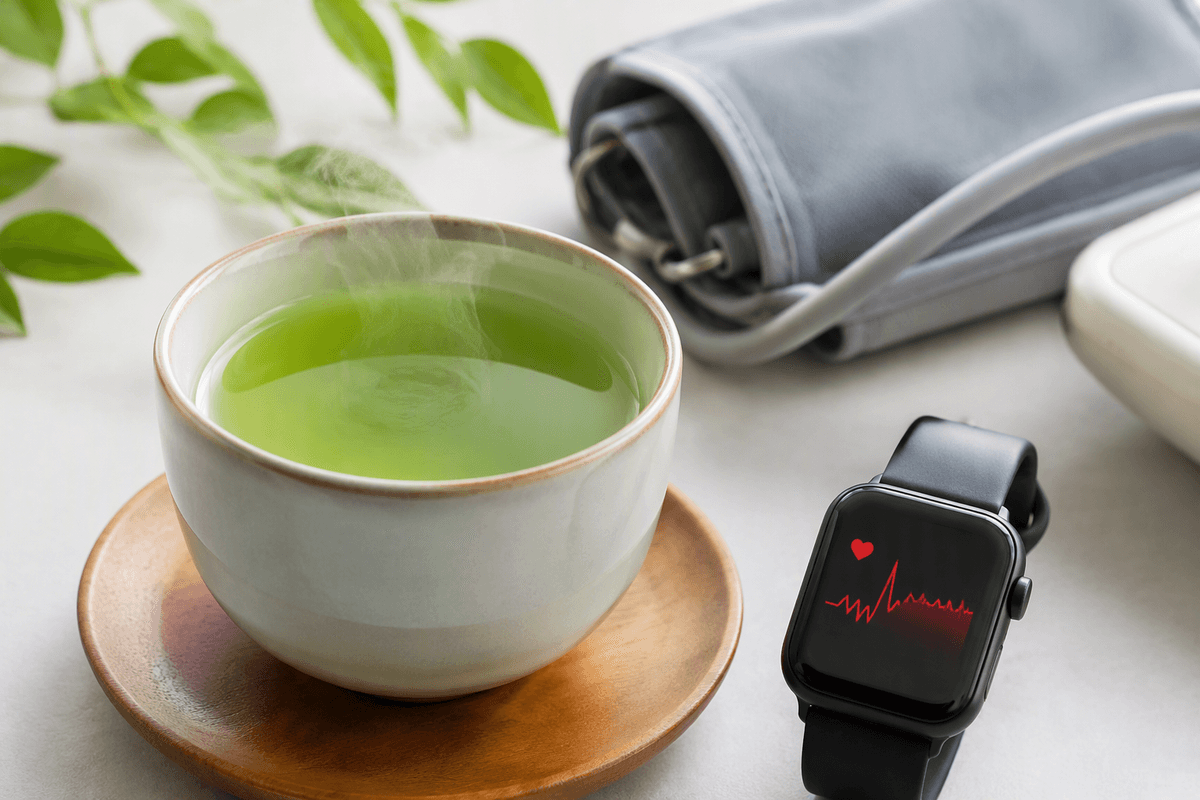
You notice it most on the mornings you’re trying to be “good”: a warm mug of green tea instead of coffee, and yet your first reading looks a touch tighter than expected. That doesn’t mean green tea is doing something dramatic—it may just be showing its energizer side at exactly the wrong moment. Even with less caffeine than many coffees, green tea can still nudge heart rate and vessel tone for a window of time after drinking, which can look like a small uptick if you measure soon after the last sip.
At the same time, green tea isn’t only caffeine. Its catechins are often discussed for longer-range vascular support, but that story tends to play out with consistency, not in a single morning’s number. For some people with borderline-high readings, the more practical effect is substitution: if green tea replaces a larger coffee (or an energy drink), the overall energizing load across the day may drop—even if the “tea bump” still appears now and then when timing shifts.
Chamomile’s calming profile and indirect BP shifts
It usually shows up in the evening, not on the screen right away: you swap your late coffee for chamomile, and the first thing you notice is that your jaw unclenches a little sooner. Chamomile is naturally caffeine-free, so it doesn’t bring the same short-term “tightening” window that can happen after an excitant. But that can create its own confusion—if your numbers don’t drop immediately, it may feel like the tea “isn’t doing anything,” even though its main effects are more about how the night goes.
In real life, any blood-pressure shift from chamomile is often indirect and a bit delayed. A calmer wind-down can mean less evening scrolling, fewer stress spikes, and slightly steadier sleep—changes that may show up as a better trend in morning readings over days rather than minutes. If chamomile replaces dessert, or a second caffeinated drink some nights but not others, the pattern in your log can look messy even when the routine is helping.
Caffeine sensitivity: the hidden deal-breaker dimension
Sometimes the giveaway isn’t the cuff at all—it’s the way your body feels 20–60 minutes after a “small” caffeinated tea. Your hands are a bit warmer or cooler than usual, your thoughts speed up, your breathing gets shallow, and your reading lands higher than it did on a chamomile night. That can be caffeine sensitivity showing up as a short, uneven stimulation window. It doesn’t always happen every time: stress, poor sleep, an empty stomach, or dehydration can make the same mug feel stronger on Tuesday than it did on Saturday.
This is where green tea and chamomile stop being a simple “healthy vs. not” choice. If green tea replaces a bigger coffee, your daily caffeine load may still fall, even if you see occasional bumps when you measure too soon after drinking. But if your sensitivity is high, even “light” caffeine can keep your numbers noisy—less a sustained rise and more a repeated, hard-to-interpret ripple in your log.
When a healthy habit unexpectedly raises readings

It often happens on a “good” day: you’ve swapped coffee for tea, you sit down feeling productive, and the cuff still spits out a higher number. The mistake is assuming the drink must be the only variable. If you measured closer to the mug than you usually do, talked through setup, or were rushing to get out the door, that small stimulation window can stack with plain old tension. With green tea, that stack is easy to miss because it doesn’t feel as intense as coffee—yet the timing can still line up with a temporary tightening in vessel tone.
The other surprise is when the habit looks healthy, but the add-ons aren’t neutral. Honey, flavored creamers, “energy” matcha blends, even a tea taken to avoid breakfast can make readings feel jumpier, especially if your body already runs sensitive to caffeine or low sleep. The pattern to watch is less “tea equals high” and more “tea plus this context equals noisy numbers,” which is frustrating, but also more solvable.
Interactions, additions, and timing that change outcomes
The clue is usually in what you put in the mug—or what you pair it with. A tea that feels steady on its own can look “spiky” when it comes with a sweet pastry, a salty snack, or a skipped meal. Sugar and refined carbs can make some people feel wired and reactive, and that sensation can bleed into how you sit, breathe, and clamp the cuff. On the flip side, a strong “green tea latte” or bottled matcha drink can quietly push caffeine higher than you think, especially if it’s made with concentrated powders or added excitants.
Timing does a lot of the damage to interpretation. If you measure right after finishing green tea, you’re more likely to catch the short window; if you measure later, you may only see whatever the rest of the morning is doing. Chamomile can get misread the opposite way: it may feel pointless if the numbers don’t change immediately, even though its effects—when they show up—often ride through sleep quality and next-day steadiness.
Choosing a fit: comfort, consistency, uncertainty
It’s usually a small comfort detail that decides it: you realize you’re reaching for the tea that makes your shoulders drop, or the one that keeps you focused without that slightly “tight” feeling in your chest. For borderline-high blood pressure, the better fit often isn’t the tea with the most promising reputation—it’s the one that lets your routine stay predictable enough that your readings mean something. When the drink changes day to day, the log turns into noise.
Green tea tends to be the more “useful” swap if it replaces a bigger caffeine habit and you can keep timing steady; the trade-off is that some people keep catching that short bump if they measure too close to the mug. Chamomile is usually easier on the numbers in the moment, but it only “shows up” if it actually changes your evening—less wired, more sleep, fewer late snacks or screens. If you’re unsure, the trend over a week of similar timing is often more informative than any single reading.