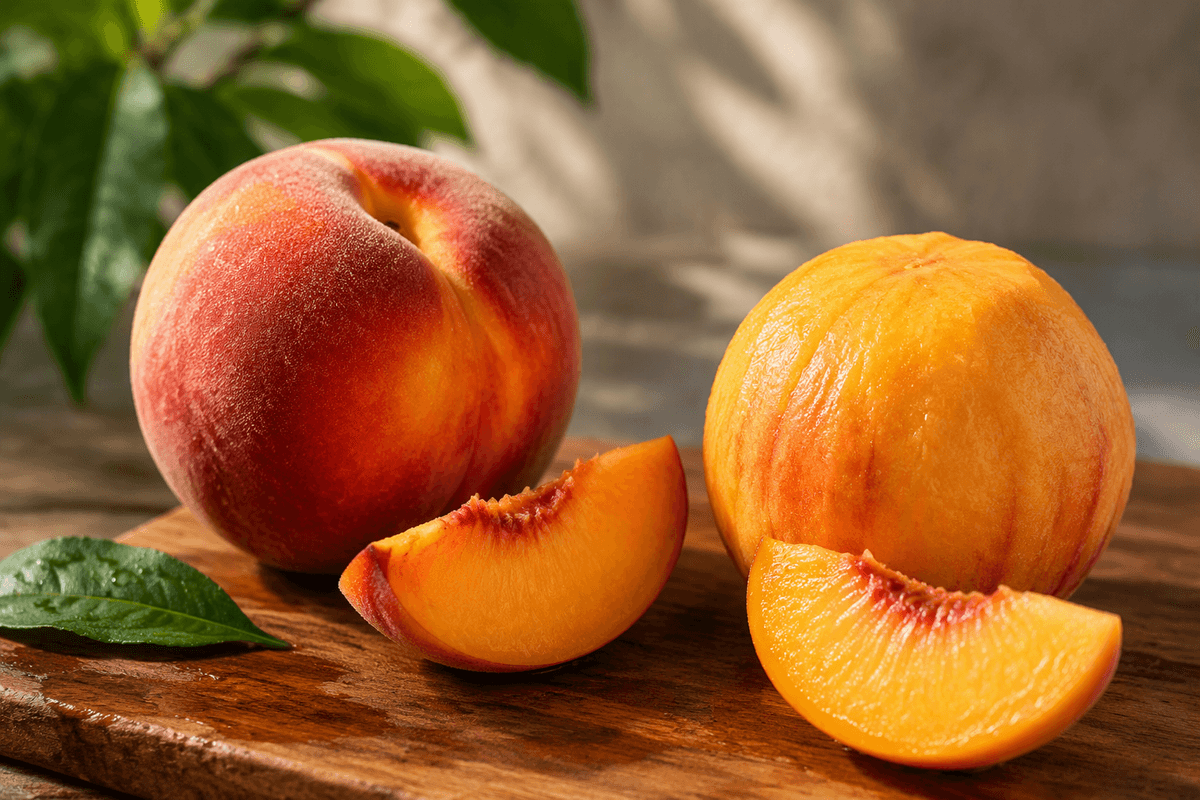
Peach skin versus peeled: what really changes
The first bite is usually where the decision gets made. With the skin on, there’s a faint drag from the fuzz and a slightly firmer “snap” before the flesh turns juicy. Peeled, the same peach can feel almost slippery—sweeter, softer, and easier to eat quickly, especially if you’re packing it into a lunch and don’t want a sticky mess.
What really changes isn’t just texture. The skin is where much of the peach’s fiber and many of its natural plant compounds tend to concentrate, so leaving it on often makes the snack feel a little more substantial. Peeling doesn’t make a peach “bad,” but it can quietly turn it into something you finish faster and feel less from. If the fuzz leaves your lips itchy or your stomach feels off afterward, the “better” choice may be the one you actually tolerate.
Fiber and fullness: skin-on tends to feel different
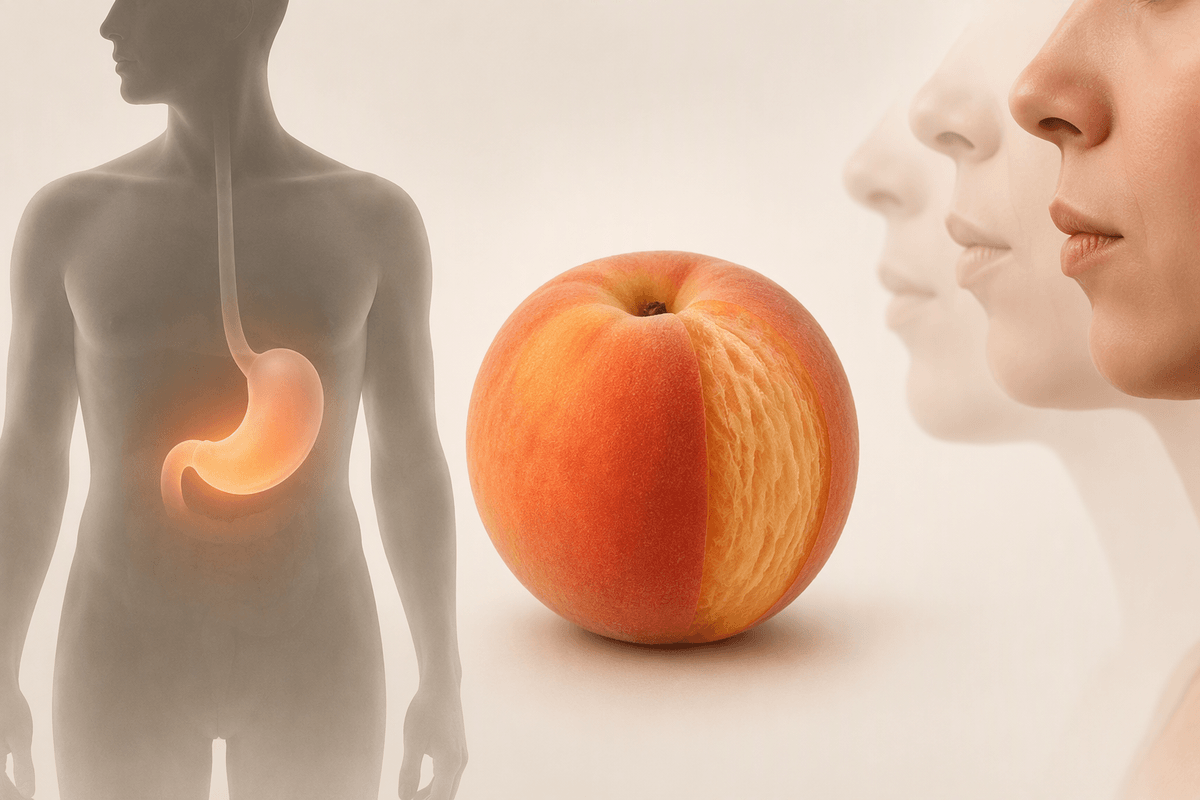
Halfway through the peach, you may notice you’re chewing a little more than you expected. The skin adds a faint resistance, and that small extra work can slow the pace in a way peeled fruit doesn’t. Skin-on peaches also tend to feel “stickier” in the sense that they linger—less like juice you can rush through, more like a snack that takes up space for a while. For people trying to stay satisfied between lunch and dinner, that can matter more than any single nutrition number.
But the signal isn’t always clean. Some days the same skin that helps you feel full can feel like sandpaper in your mouth, or it can leave your lips prickly enough that you stop early anyway. And if your digestion runs sensitive, a higher-fiber peach can land differently depending on what else you ate, how ripe it is, and whether you’re eating fast in the car. Fullness helps most when it’s comfortable.
Where the nutrients sit: skin carries more than color
If you slice a peach for a lunchbox, the color shift is easy to miss: that thin band right under the fuzz is usually deeper and more fragrant than the pale center. It’s also where more of the “extra” stuff tends to live—fiber, plus small plant compounds that behave a bit like the fruit’s built-in protection. When you peel, you don’t just remove fuzz. You often shave off that concentrated outer layer and turn the snack into mostly soft, sweet flesh.
In day-to-day eating, that shows up less as a dramatic nutrition difference and more as a pattern. Skin-on peaches may feel a little more “complete,” especially if fruit is one of your main snacks, while routinely peeling can quietly lower how much fiber you get across a week. The same outer layer can also be the part that bothers people first—itchy lips, a scratchy throat, or a stomach that feels unsettled—so the nutrient “win” only counts if you can comfortably keep it in your routine.
Digestive comfort and texture friction for sensitive guts
Sometimes it’s not the taste that makes you hesitate—it’s the after-feel. A peach with the skin on can leave your mouth a little raw around the edges, like you ate something lightly abrasive. That same “friction” can show up lower down, too: for some people, the skin’s fiber and tiny hairs seem to linger, and the snack that felt wholesome at noon turns into mild bloating or a cramped, unsettled feeling later.
A very ripe peach often breaks down more easily, while a firmer one can act more like roughage, especially if you’re eating quickly or pairing it with other higher-fiber foods. And if you’re someone who already notices sensitivities—scratchy throat, prickly lips, a stomach that reacts to peels and seeds in general—peeling a peach isn’t “missing out” so much as reducing one common trigger. The trade-off only becomes obvious over time, when comfort starts to shape what you actually reach for.
Residue worries: pesticides, fuzz, and what washing changes
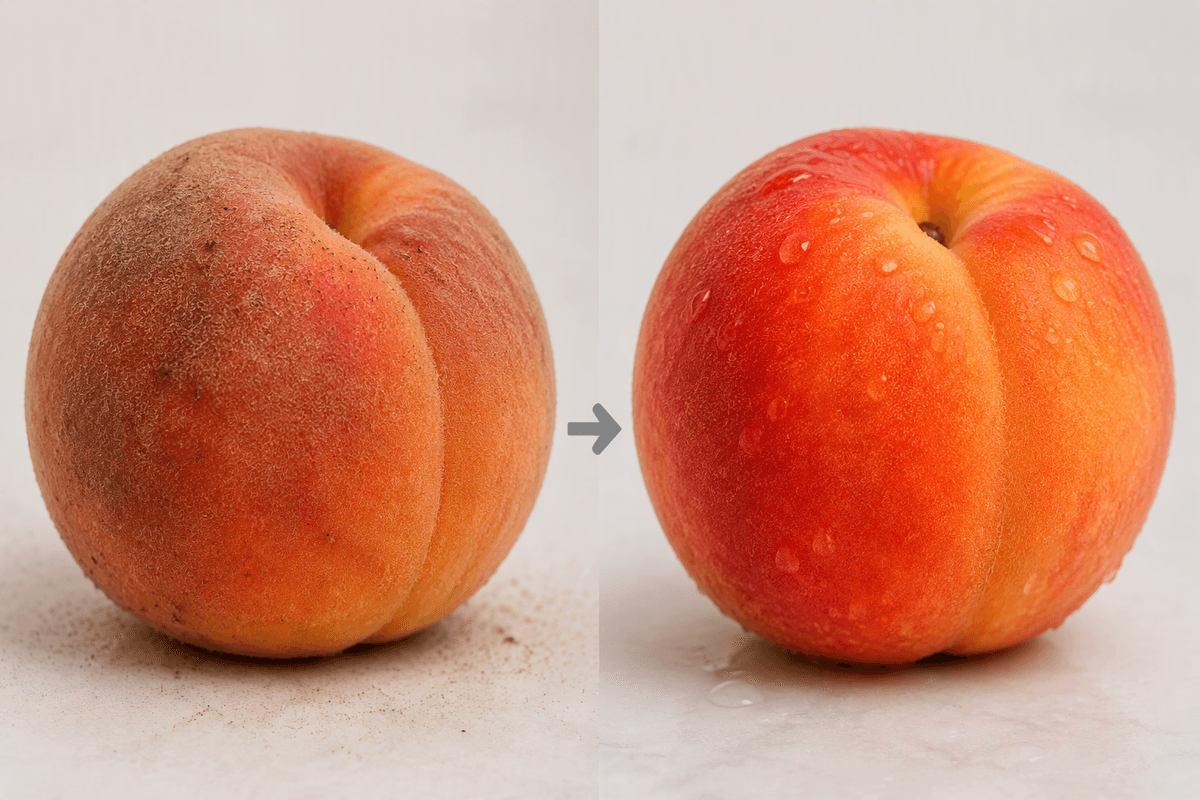
In the sink, the fuzz is usually what grabs your attention first. A quick rinse can make it feel cleaner, but it also makes the skin feel even more velvety—like you’re noticing every tiny hair. That’s often where the worry shows up: if the skin is “where the good stuff is,” it’s also the part that’s been exposed to sprays, dust, and whatever hands touched it between the tree and your kitchen. Peeling can feel like the simple fix, especially when you’re packing lunch and don’t want to think about it again.
Washing helps, but it’s not a magic erase button. A careful rub under running water can remove a lot of surface grime and reduce that fuzzy “film” feeling, yet some residues can cling more than you’d expect, and the peach’s crease can be easy to miss. Still, for many people the practical trade-off is emotional as much as nutritional: skin-on feels better when it feels clean enough to enjoy without second-guessing every bite.
The “healthier” choice depends on your eating pattern
It often shows up in the boring moment, not the dramatic one: you’re standing at the counter deciding whether to bother with the peeler because you’re already running late. If peaches are an occasional treat, the difference between skin-on and peeled may not change much beyond how fast you eat it and whether it leaves your mouth feeling scratchy. But if peaches are your default snack most afternoons, the small choices stack up. Keeping the skin can quietly nudge your day toward more fiber and a steadier “I’m good for now” feeling, which matters if you’re trying not to rummage for something else an hour later.
Still, “healthier” can backfire when your routine is inconsistent. If you skip fruit entirely because the fuzz feels like work, or you eat the skin and end up uncomfortable enough to avoid peaches for a week, the theoretical benefit doesn’t land. For some people, peeled fruit is the version that actually fits—easy to pack, easy to finish, and easy to repeat.
When a reasonable choice backfires, then makes sense
You notice it later, not during the snack: a faint prickling on your lips, a throat that feels a little scratchy, or that “too full” pressure that doesn’t match how small the peach was. In the moment, eating the skin seemed like the cleaner, more disciplined choice—the one with the fiber, the plant compounds, the staying power. But if it regularly turns into irritation or a distracted afternoon of mild stomach unease, the habit can quietly collapse. People start buying peaches less, or they leave them in the drawer until they’re too soft to bother with.
That’s where peeling can stop looking like “giving up” and start looking like a workaround that keeps fruit in your day. It’s not always about fear of residue or chasing perfect nutrition; sometimes it’s simply choosing the version you can eat without bracing for the texture. If the pattern keeps repeating, the most useful signal is consistency: what you’ll actually pack, finish, and feel okay after.