Why “healthy yogurt” can still spike blood sugar
It often starts with a “clean” label and a familiar routine: a fruit-on-the-bottom cup after a workout, or a quick breakfast you can eat in the car. The first few bites taste tart enough to feel virtuous, so the sweetness registers as “just fruit.” Then an hour or two later, the signal is subtler—your stomach feels oddly empty again, you’re scanning for something crunchy, and the next snack starts to feel urgent.
Part of the surprise is that yogurt already contains lactose (a natural milk sugar), and flavored versions can stack that with added sugar or concentrated fruit. Without much fiber to slow things down, the carbs can hit more like a small dessert than a steady snack. Even when the front of the package says “protein” or “low fat,” the overall effect can still be a quicker rise followed by a dip that leaves you hungrier than you expected.
Added sugar, fruit, and thickeners change the glucose curve
You notice it when you peel back the lid: the yogurt itself looks plain, but there’s a glossy layer of “strawberry” at the bottom that tastes more like jam than fruit. That’s often where the glucose curve gets reshaped. A few teaspoons of added sugar can turn a cup from “tangy dairy” into a quick carb hit layered on top of lactose. Even fruit can behave differently depending on the form—purées and concentrates tend to land faster than bigger pieces of fruit, and the cup rarely comes with the fiber you’d get from eating fruit whole.
Then there are the quiet ingredients that change texture: starches, gums, and other thickeners that help yogurt stay smooth, pourable, and consistent. They don’t always add many grams on the label, but they can make the carbs easier to digest, especially in low-fat yogurts that rely on thickening instead of creaminess. Two cups with the same “total carbs” can still leave you feeling different afterward.
Protein, fat, and fermentation can soften the rise
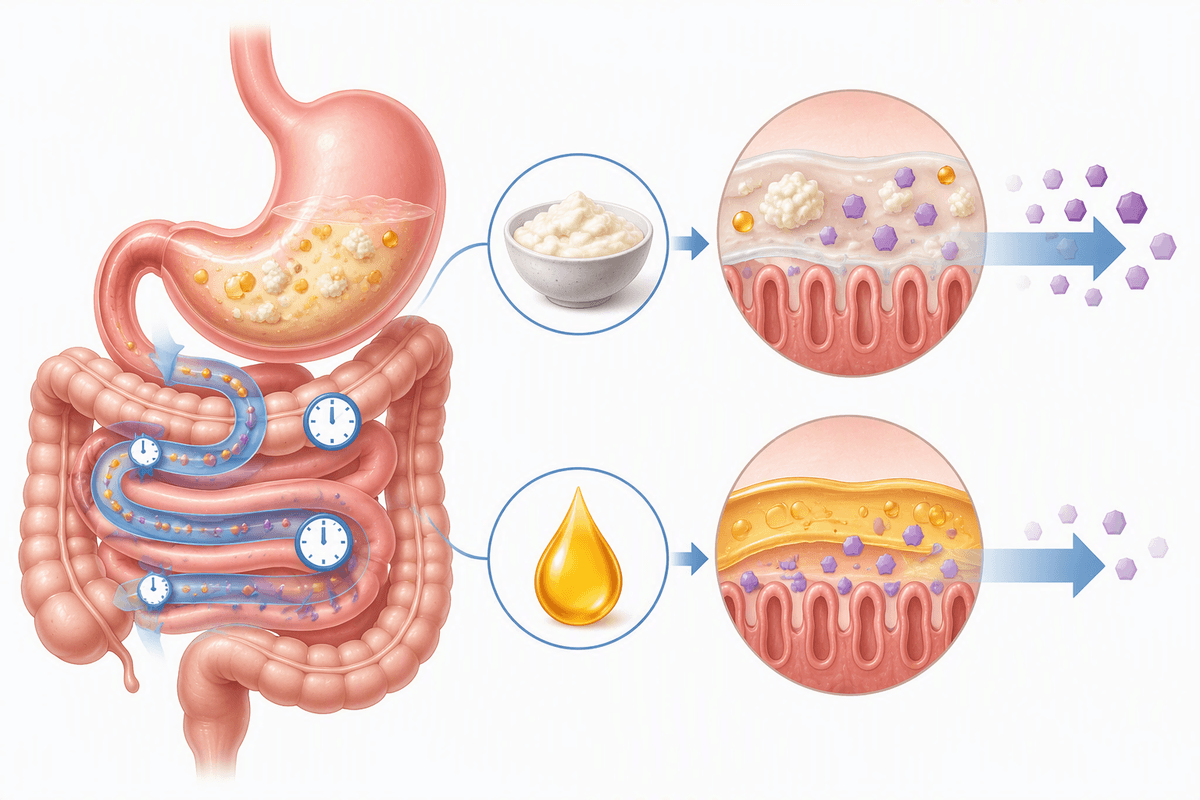
The difference can show up in your spoon before you even look at the numbers. One yogurt feels thin and very sweet, and it seems to “disappear” fast. Another tastes more tangy, sits heavier, and the hunger doesn’t snap back so quickly. That’s often protein and fat doing quiet work in the background—slowing how quickly the carbs in lactose and added sugars move through you, and sometimes making the rise feel less sharp.
Higher-protein styles (like Greek or skyr) tend to change the after-effect because they’re not just “carbs in a cup.” A little more fat can have a similar smoothing effect, though it also makes portions easier to underestimate. Fermentation adds another wrinkle: the more tart, less dessert-like yogurts are often the ones with fewer add-ins, and some people find they feel steadier with them. Still, two “high-protein” cups can land very differently if one gets there with added sweeteners and the other gets there with less sugar overall.
Comparing yogurt styles by blood sugar uncertainty
Sometimes the confusion starts in the dairy aisle, where two cups both say “vanilla,” both promise “live cultures,” and both look like they should behave the same. But the steadiness you feel afterward can be surprisingly inconsistent, mostly because the “style” hints at texture and protein—not automatically at sugar. A drinkable yogurt or whipped, low-fat cup often goes down fast and can act more like a sweet beverage, especially if the carbs are coming from lactose plus syrupy fruit. A thicker Greek or skyr tends to slow the experience down, but it’s not a guarantee if the flavoring is basically dessert stirred in.
The uncertainty is highest when the product is engineered to taste easy: smooth, sweet, and low in tang. Nonfat versions may lean on thickeners and sweeter add-ins to stay satisfying, while whole-milk versions can feel steadier but also make portion size easier to overshoot. Plant-based “yogurts” vary even more—some are lower sugar, others are starch-forward and sweet. The label style gives you a direction, not an outcome, and your body’s “hungry again” timing is often the clue that matters.
Portion size and pairing can surprise people most
The surprise sometimes shows up when you’re not even “having yogurt”—you’re finishing a cup while answering emails, then adding a banana because it still feels like breakfast. That’s where portion size quietly shifts the math. A single flavored cup can already carry lactose plus added sugars; turning it into a “bigger” snack (two cups, a larger tub, or a heavy-handed scoop) can push the carb load past what you expected from something that tastes light and cold.
Pairing can swing things, too, and not always the way people assume. Granola, honey, or dried fruit can make a yogurt bowl feel wholesome while stacking fast carbs on top of fast carbs. On the other hand, a more filling pairing—something with crunch and fat or protein—may slow the after-effect, but it’s inconsistent and takes effort to do intentionally. If you’re hungry again unusually soon, the “portion + add-ons” combination may be doing more than the label suggests.
Reading labels without getting trapped in buzzwords
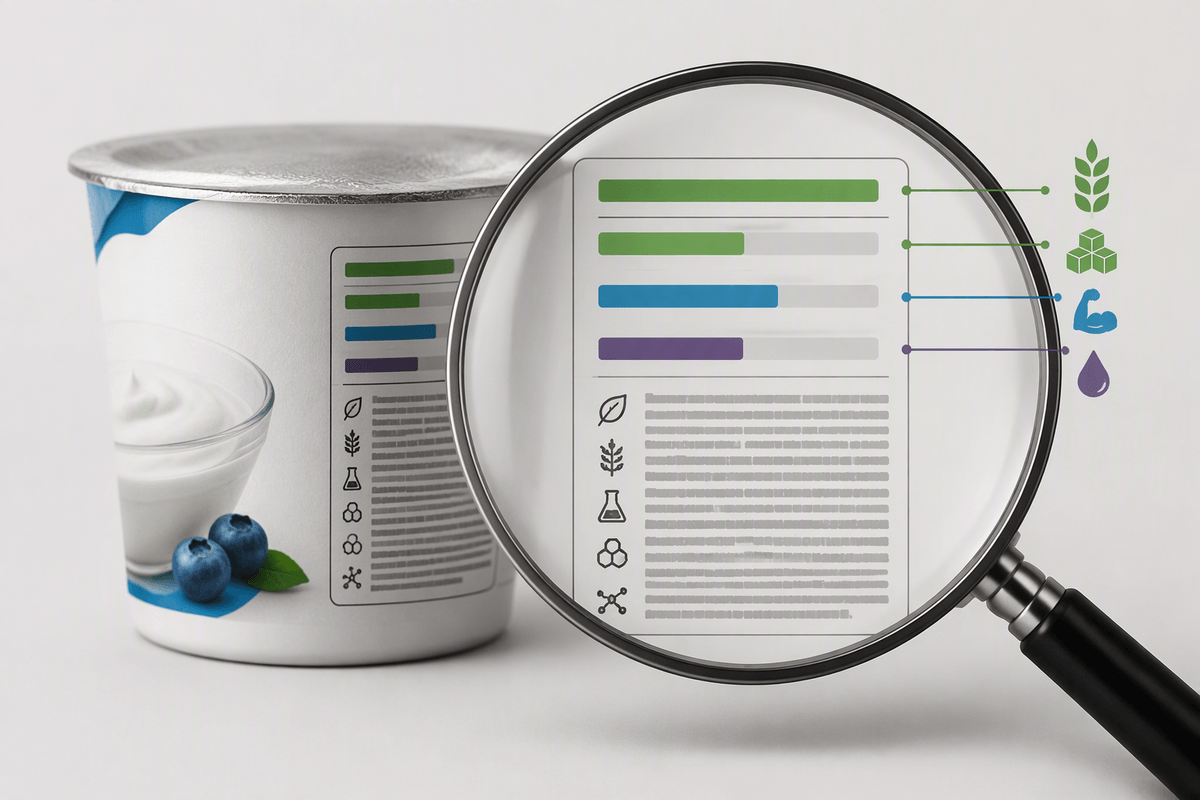
You can feel the trap when you flip the cup over in the store and your eyes land on the front again: “high protein,” “low fat,” “made with real fruit.” None of that is useless, but it can keep you from noticing the numbers that actually explain why you might be hungry again soon. The carb line is where the story usually starts, because it captures lactose plus whatever was added. “Total sugars” helps, but it doesn’t tell you whether that sweetness came mostly from milk or from syrups and fruit prep.
The ingredient list is often the tie-breaker when two yogurts look similar. If sugar (or several sweeteners) shows up early, “fruit” may be functioning more like flavoring than a serving of fruit. Watch for how easy it is to miss the serving size, too—some tubs make a dessert-sized portion look like a normal snack. When the label feels confusing, that confusion itself is a clue: the product may be engineered to sound steady while behaving fast.
When flavored yogurt fits—and when it’s frustrating
It’s often the “healthy dessert” moment that reveals the trade-off: you want something sweet after dinner, you grab a flavored cup, and it feels like a responsible choice—until you notice you’re still drifting back to the pantry. In some situations, flavored yogurt fits best when it’s doing a specific job: a measured portion that satisfies a sweet tooth, with enough protein to feel like food instead of a sugar hit. But it can be frustrating when the flavoring turns the cup into two sugars at once—lactose plus added sweeteners—without much fiber to slow the slide.
The mismatch is also emotional, not just numeric. A label can say “vanilla” and “high protein,” and you still end up with that familiar pattern: a quick lift, then an oddly sharp hunger. If that keeps happening, it may not mean yogurt is “bad”—it may mean this particular flavored version is acting more like a snack-sized dessert than the steady anchor you thought you were buying.